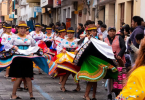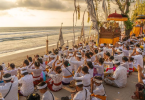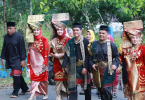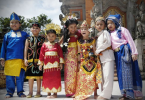

Indonesian cultural traditions are not museum exhibits; they are the living fabric of daily life across the archipelago. With more than a thousand ethnic groups and six officially recognised religions — practised alongside countless local beliefs — Indonesia has woven an extraordinary variety of ceremonies, arts and customs into everyday existence. For visitors, witnessing Indonesian cultural traditions with respect and understanding turns a good trip into a profound one. This guide introduces the traditions you are most likely to encounter and how to experience them well.
A Country of Many Cultures Living Side by Side
The national motto, Bhinneka Tunggal Ika — “Unity in Diversity” — is not a slogan but a daily practice. On a single street you may find a mosque, a church and a Hindu temple; in Bali, offerings of flowers and rice appear on pavements every morning, while in Java the call to prayer drifts over gamelan practice in a neighbour’s yard. Festivals of one community are often celebrated by all: Christmas markets in Manado, Lunar New Year in Jakarta’s Glodok district, and Eid feasts shared with non-Muslim neighbours.
This layering shapes Indonesian cultural traditions everywhere. Ancient animist customs blend with Hindu, Buddhist, Islamic and Christian practices, producing ceremonies that exist nowhere else on Earth. The visitor’s first lesson is humility: you are not observing a performance staged for you, but a community living its own life — and being welcomed to watch is a privilege.
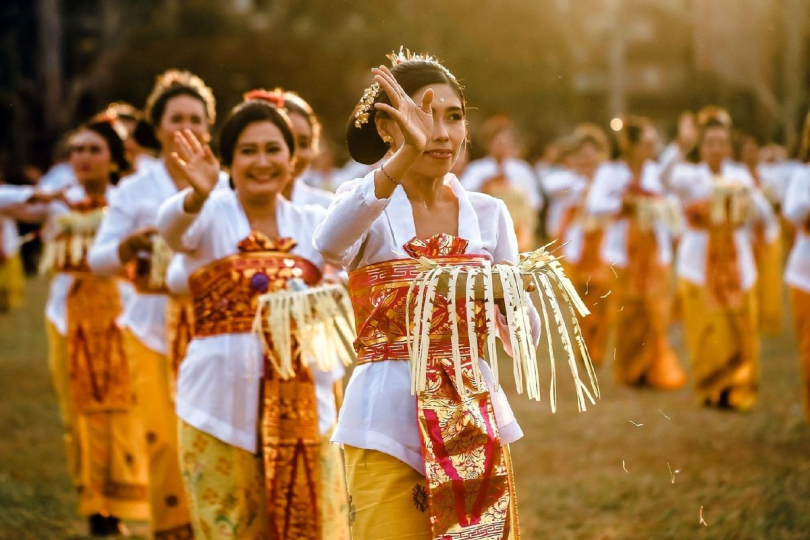
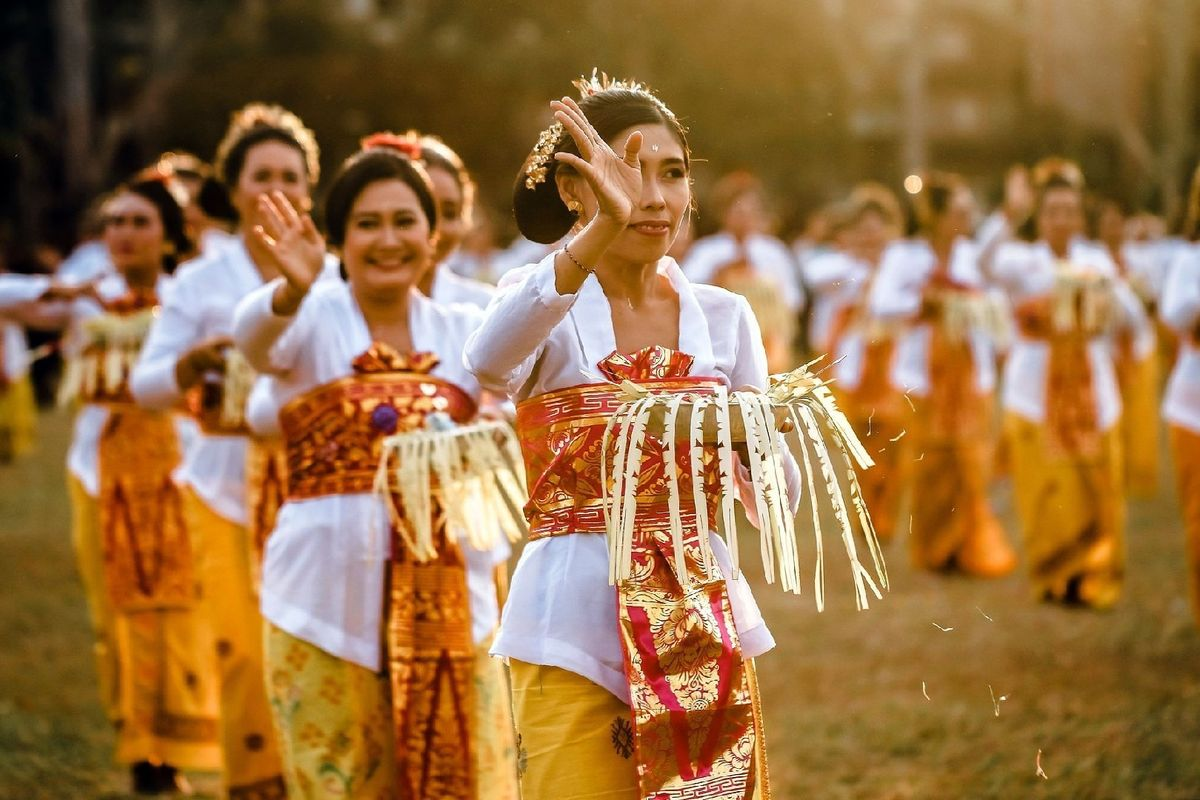
Religion and tradition also shape the smaller rhythms of the week. Friday prayers pause the working day in Muslim-majority regions; Sunday church bells ring across Christian areas like North Sulawesi and parts of Papua; in Bali, temple anniversaries (odalan) happen so frequently — every temple follows a 210-day calendar — that a visitor in any month will stumble upon processions of women in lace kebaya carrying towers of fruit offerings on their heads. None of this is staged. It is simply what the week looks like when faith is lived in public, and it gives travel here a texture that purely scenic destinations cannot match.
Ceremonies and Festivals Throughout the Year
If your trip coincides with a major festival, consider yourself fortunate. Nyepi, the Balinese Day of Silence, shuts down the entire island — no lights, no travel, no noise — preceded by parades of giant ogoh-ogoh monster statues. Ramadan transforms evenings across the country into feasts, and Eid al-Fitr (Lebaran) is the year’s greatest homecoming, when cities empty into villages and tables overflow.
In Tana Toraja, in the highlands of South Sulawesi, elaborate funeral ceremonies (Rambu Solo) gather hundreds of guests for days of ritual, music and buffalo processions, reflecting a culture where death is a journey, not an ending. In crowded festival settings like these, a little awareness goes a long way: keep valuables secure, follow the crowd’s flow, and stay alert to your surroundings in the same practical spirit as this look at security alerts for users in busy online spaces — attention and calm are good habits in any crowd, digital or physical.
Traditional Dance, Music and Craft
Performance is woven into Indonesian cultural traditions at every level. Bali’s Legong and Kecak dances retell ancient epics through hypnotic movement and chanting; Java’s wayang kulit shadow puppetry performs all-night stories accompanied by the shimmering bronze of gamelan orchestras. In West Sumatra, the plate-spinning Tari Piring combines dance with genuine risk, and in Aceh the Saman dance — a thousand hands moving in perfect rhythm — is recognised by UNESCO.
Craft carries the same heritage. Batik cloth is drawn with hot wax in patterns that once marked royal courts; ikat weaving in Flores and Sumba encodes clan histories in thread; woodcarvers in Jepara and Bali turn teak into doors, masks and furniture of astonishing detail. Watching a master at work, and buying directly from the maker, keeps these skills alive far more effectively than any museum donation.
Craftsmanship in the Indonesian Home
Tradition lives in Indonesian homes as much as in temples. The joglo houses of Java, with their steep layered roofs and carved central pillars, are architecture as philosophy — and even modern Indonesian homes carry echoes of them: open verandas for receiving guests, kitchens built for cooking in quantity, and courtyards that blur indoors and outdoors. Hospitality is sacred: a guest is fed before any business is discussed, and shoes always come off at the door.
That instinct — turning ideas about comfort, welcome and family into physical spaces — continues today. Reading about how bathroom installers turn ideas into practical spaces shows the modern side of the same craft culture: skilled local makers translating a family’s needs into rooms that work. From carved teak doors to a well-planned renovation, Indonesian craftsmanship is one continuous tradition of making spaces serve life.
Language carries tradition too. Bahasa Indonesia unites the country, but more than seven hundred local languages are still spoken, and even a few words of Javanese, Balinese or Sundanese — a greeting, a thank-you — will be received with delight. Older generations may also share the proverbs and folk tales of their region, stories in which clever mousedeer outwit crocodiles and spirits inhabit great banyan trees. Listening to those stories, ideally over coffee on someone’s veranda, is as much a cultural tradition as any festival, and it is the one visitors most often remember years later.
Respect and Etiquette for Visitors
A few rules open every door. Dress modestly at religious sites — cover shoulders and knees, and wear the sash and sarong provided at Balinese temples. Always ask before photographing a ceremony or a person at prayer, and never step on or over offerings placed on the ground. Use your right hand to give, receive and eat. Remove shoes when entering a home or mosque, and accept offered food or drink with gratitude, even if you only taste a little.
Above all, slow down. Ceremonies run on their own time, processions cannot be scheduled for your convenience, and the most rewarding moments — an invitation to sit, a story from an elder, a taste of something made for the festival — arrive only to visitors who linger respectfully.
Conclusion
Indonesian cultural traditions reward the visitor who watches with patience and participates with respect. Seek out the festivals, sit through the dances, buy crafts from their makers and learn the etiquette that honours your hosts. You will leave with more than photographs: you will leave with an understanding of how a thousand cultures can share one country — and that understanding is the finest souvenir Indonesia offers.